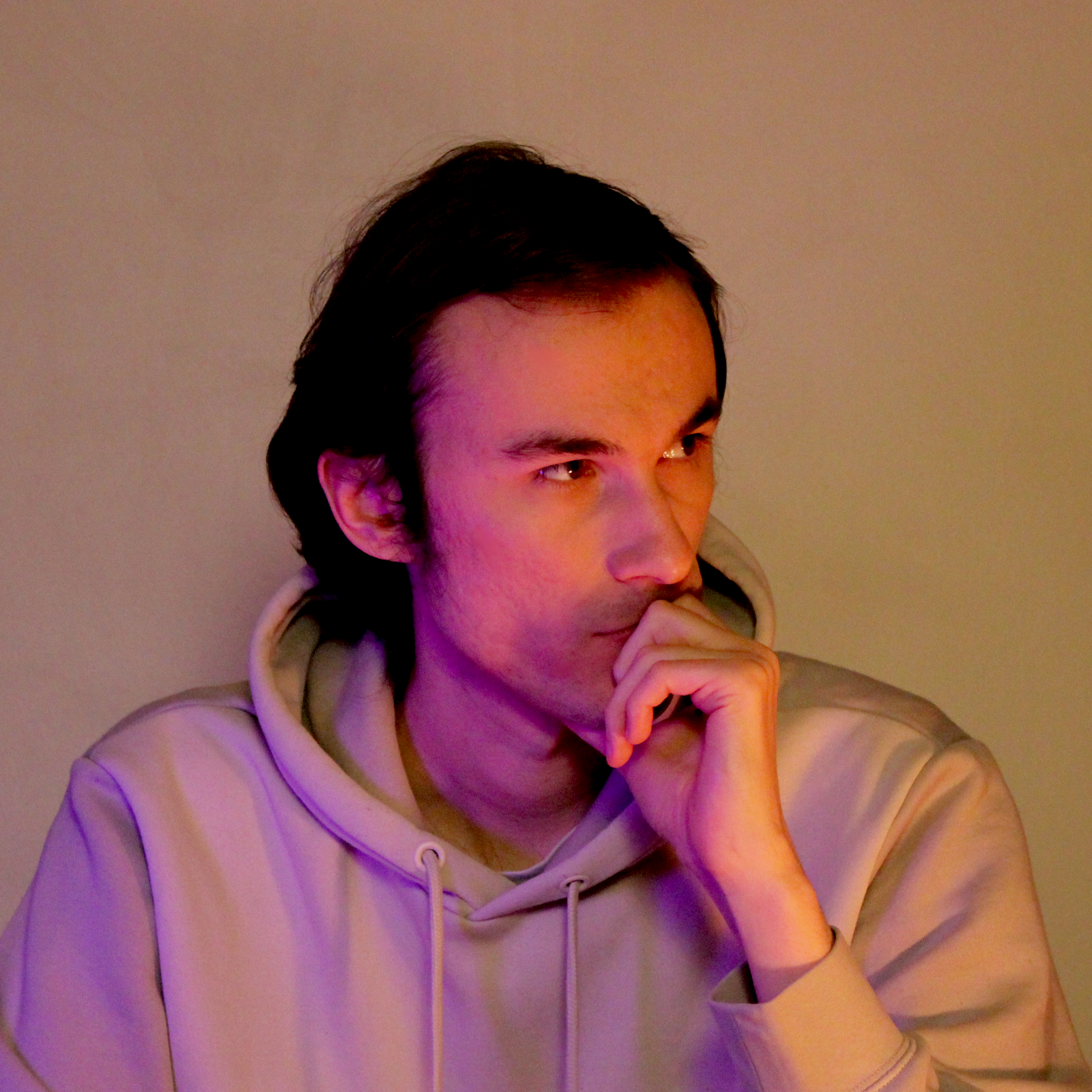
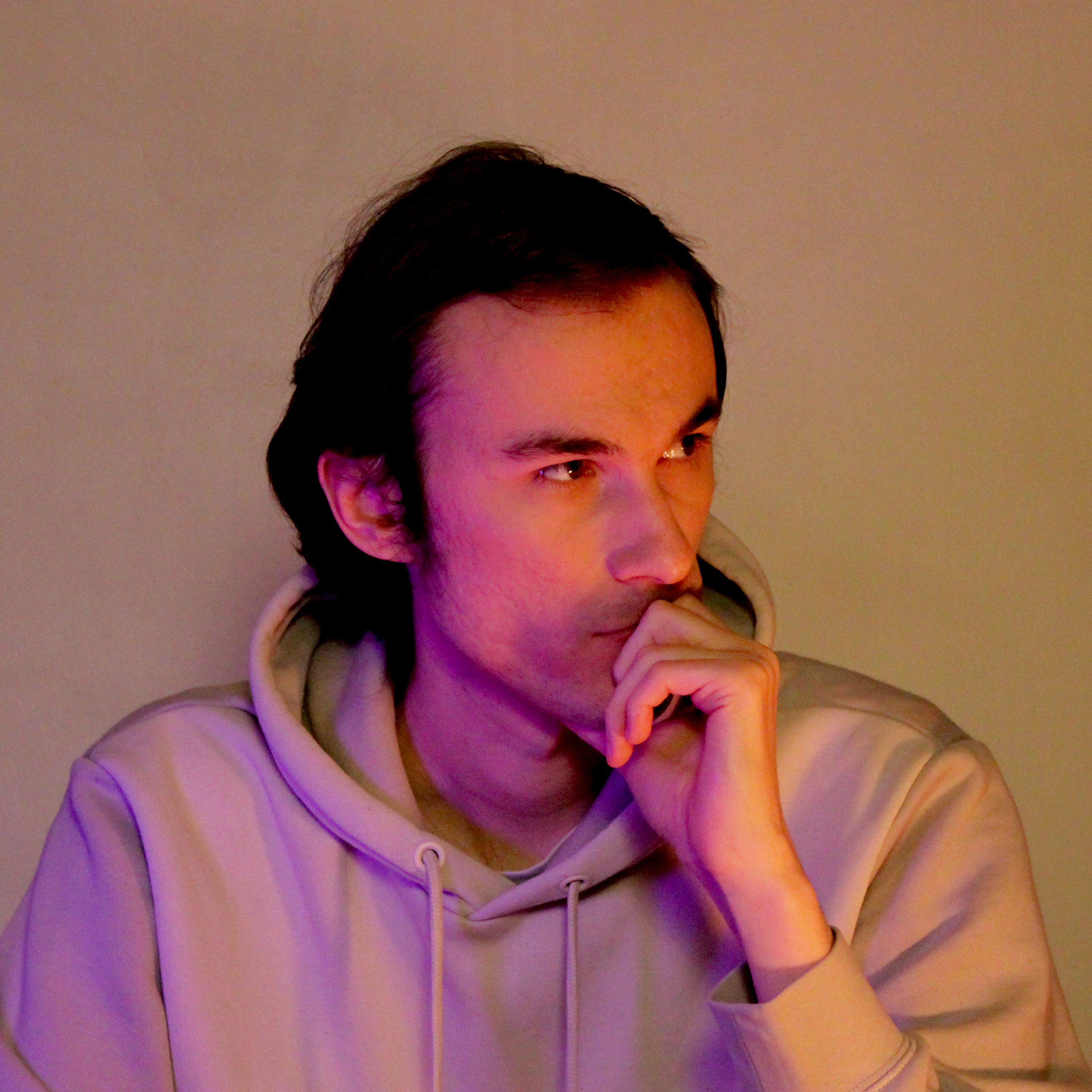
I am a french Researcher working in Computer Science. I focus on operations research, computational social choice and complexity theory. During my PhD I worked on algorithms taking a fair collective decision in settings in which there is an optimization aspect. I studied multi-agent scheduling problems as well as the Participatory budgetting problem. After that, I went to Austria and worked on parameterized complexity during a post doc. I am currently working in LIP6 on algorithmic methods to generate low-discrepancy point sets.
You can find a list of my publications on dblp. You will also find a few publications below.
I also have two papers relative to my current post doc submitted but not yet accessible as preprints.
CNRS | November April 2025 - Present
I am currently working at CNRS, on the Jussieu campus. I am working on the generation of low-discrepancy point sets under the supervision of Carola Doerr. A significant part of the postdoc has been devoted to the creation of a public git repository to make various algorithms from the literature accessible as well as our own results.
TU Wien | November 2023 - December 2024
I am currently working in the Algorithms and Complexity team in TU Wien. I am working on parameterized complexity of collective decision problems. I am working under the supervision of Jiehua Chen.
LIP6 | February-August 2020
The last semester of my master's degree was dedicated to an internship, in my case in the LIP6 laboratory, supervised by Fanny Pascual and Olivier Spanjaard. The internship focused on a probabilistic approach to the collective rankings problem. In other words, given the preferences of a population over a set of alternatives, expressed as rankings, how do we choose one collective ranking which aggregates those preferences.
LIP6 | July-August 2019
I did an optional resarch internship between my master's degree first and second year, supervised by Fanny Pascual. We focused on a multi-agent scheduling problem.
LIP6 | 2020 - 2023
PhD in the Operations Research team of the LIP6, supervised by Fanny Pascual. I was working on multi-agent scheduling ("Ordonnancement en présence de plusieurs acteurs : de la théorie de l'ordonnancement au choix social computationnel" is the full french title). I defended my PhD thesis in October 2023. I was also teaching in the Bachelor's and Master's degrees in Sorbonne Université.
Sorbonne Université | 2018 - 2020
I took my computer science master's degree in Sorbonne Université. The degree is called ANDROIDE, it focuses on Artificial Intelligence, Operations Research, Decision Multi-Agent Systems and Robotics.
I have been doing reviewing work for several conferences including AAAI, IJCAI, AAMAS, and ECAI as well as the EJOR and Artifcial Intelligence journals.
One of the most important event we participate in as an association is the "Fête de la Science" (a national event allowing all publics to discover the world of science). During this event, we meet students from all ages and all backgrounds and introduce them to computer science in an interactive and friendly way.
During my PhD at LIP6, I am in charge of the organization of a PhD seminar regrouping PhD students and Post Docs of the Operations research and Decision teams of LIP6. Every other week, one of us presents some results, a field of research or an introduction to his or her thesis. It is a great way to create cohesion in the team and to rehearse for future presentations. Informations can be found here.
I supervised, with Sofia Simola, two master students who worked on parameterized complexity of hedonic games, leading to a submission to the AAMAS conference in 2025.
This class focuses on resolution techniques for hard problems. We present constraint programming, metaheuristics, approximation algorithms, linear relaxation ... The goal is to present different algorithmic techniques and tools to evaluate them. We focus mainly on wellknown problems : Travelling Salesman, Set cover, Scheduling problems ...
In this class, we present different algorithmic techniques and we show how to study algorithms complexity. We start by several algorithms on graphs (shortest paths, minimum spanning tree ...). Then, we focus on greedy algorithms and finally on dynamic programming. The main goal of this class is to give students tools for the design and the analysis of algorithms.
The goal of this class is to introduce students to the notion of complexity of an algorithm. How do we define it and how do we compare different algorithms in terms of complexity. We apply these principles on different examples : sorting, search in graphs or trees ...
The goal of these classes is to introduce the stduents, working either alone or in small groups, to bibliographical research and research more generally. They are given a topic and a couple of starting papers and are expected to find relevant other papers and summarize, through both a manuscript and a presentation, the state of the art.
In this class, we focus on the implementation of different types of algorithms in C language. We focus on greedy algorithms and on dynamic programming. We also show how to theorically and experimentally evaluate the complexity of an algorithm.
The goal of this class is to show how the use of different data structures impact the complexity of algorithms. We use tables, lists, trees, graphs and more complex structure and study theoretically and experimentally how the computation times evolve.
I am a big fan of cinema. I mainly watch drama movies. "Drama is life with the dull bits cut out" - Alfred Hitchcock.
More of a casual climber than a regular one. I enjoy this sport because of the versatility it requires: strength, agility, flexibility, balance. I also like that each route is a puzzle you solve using your own skills.
I listen to music pretty much whenever I have the opportunity: walking, coding, drawing, writing. I mainly listen to progressive rock (Archive and Pink Floyd) and indie folk bands (Daughter and Clann).
© Martin Durand. All Rights Reserved. Designed by HTML Codex